01
Audience & channel strategy
An audit, defined buyer roles, content pillars, and a measurement plan that connect LinkedIn to your demand system.
Organic LinkedIn · B2B technology
Having a LinkedIn presence and having one that actually brings in business are two very different things. Most B2B tech companies have the first.
Stratskye builds the second, turning scattered posting into a system where your company and your founder are the reason a buyer stops scrolling, remembers your name, and reaches out.

The role of LinkedIn
B2B LinkedIn marketing services manage a company's organic LinkedIn presence, including strategy, Company Page and executive profile positioning, content, engagement, and performance analytics, built to feed into demand generation rather than exist as its own disconnected task.
The missing connection
Here is the pattern that shows up in almost every audit we run. A company posts consistently for a few weeks, sees modest engagement, and the momentum fades before anyone on the buying side has actually noticed. The problem usually is not effort. It is that the effort was never pointed at the specific things that make LinkedIn work for B2B.
Content gets written for a general professional feed instead of a defined set of roles and industries, which means it reaches a lot of people who were never going to buy anything.
A Company Page update carries less weight with a buyer than a founder or executive who clearly knows the subject firsthand, and most companies default to the weaker option.
A strong month followed by two months of silence tells both the algorithm and any buyer checking your profile that this is not an active priority, regardless of how good the earlier content was.
LinkedIn runs as its own island, disconnected from the rest of the marketing system, so even genuine engagement never turns into a tracked conversation.
Impressions get reported because they are easy to pull, while the questions that actually matter, who is engaging and whether it leads anywhere, go unanswered.
What we deliver
Each deliverable below exists because it solves one of the gaps above. None of them work particularly well on their own.
An audit, defined buyer roles, content pillars, and a measurement plan that connect LinkedIn to your demand system.
Company Page and executive profile messaging that make your expertise and product relevance clear to buyers.
SME interviews, editorial planning, and content production built around your team's experience and point of view.
An agreed publishing cadence and engagement routines that keep the right conversations moving.
Monthly reporting across visibility, audience quality, and demand signals, with recommendations for what to improve.
One main contact, weekly updates, and a clear approval process across your company and executive voices.
This engagement covers organic LinkedIn. Paid LinkedIn advertising and outbound automation are scoped separately.
Why Stratskye
Our experience with B2B and technology companies means content briefs and SME interviews get built around what genuinely differentiates your product, rather than pulled from a generic industry template that could describe any competitor.
Audience research, content, publishing, engagement, and reporting run through one team instead of getting handed off between departments that rarely talk to each other.
LinkedIn content built around a founder or executive's real expertise reads as credible to B2B buyers in a way company-only posting almost never does.
LinkedIn activity supports B2B demand generation rather than running in isolation, with downstream tracking of where it actually leads.
One main contact, weekly updates, and monthly reporting for the full engagement, so you always know what is happening and why.
How it works
Strategy comes before a single piece of content gets written. Content built without a defined audience and a clear voice tends to read as generic no matter how well it is produced.
We review your current presence, define the audience, and set the content system and measurement plan together.
Content gets produced, publishing activates, and engagement routines start running consistently.
We analyze what is actually resonating, adjust the approach based on real signals, and report on where to focus next.
We need product and market context, access to your subject-matter experts, brand and compliance guidance, and timely approvals from your side throughout.
Measurement
Visibility numbers tell you whether content is getting seen. Audience quality tells you whether it is being seen by the right people. Neither one, on its own, tells you whether any of it is actually contributing to pipeline. That last question depends on tracking and CRM feedback working together properly.
We report across these layers together, so you can see whether content is reaching the roles that actually matter to your business, not just generating reach for its own sake.
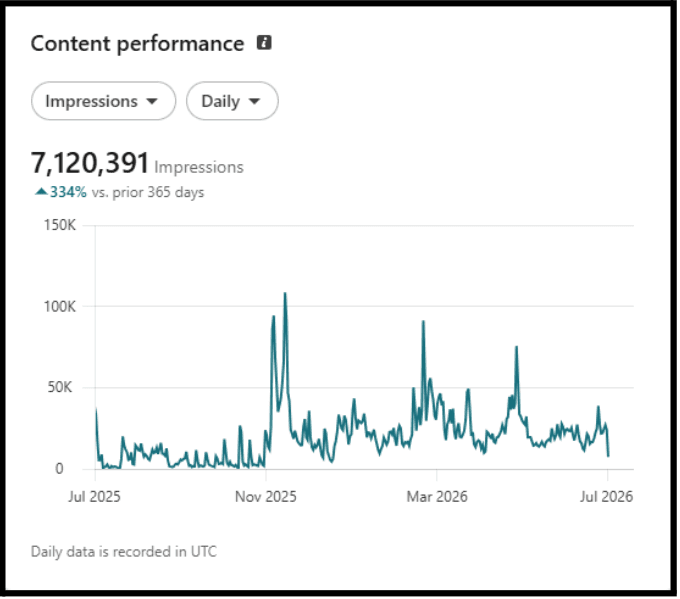
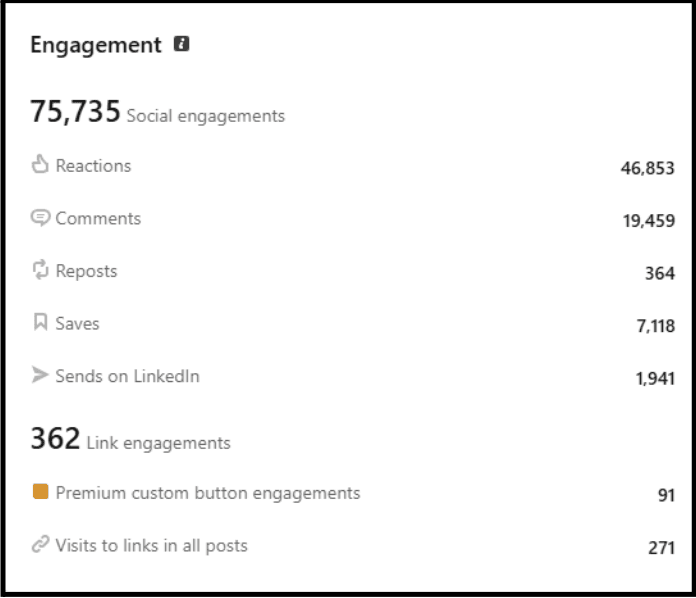
These analytics show visibility and engagement from a broader client engagement; they are not a forecast or a pipeline attribution claim.
Read the M1 Performance case studyEngagement scope
Every engagement gets scoped after diagnosis, because the work involved in running a single executive voice looks nothing like the work involved in running a Company Page alongside three executive profiles at once.
A single executive profile requires a different scope from a Company Page and several executive profiles.
Publishing cadence, interviews, and production requirements shape the work involved.
Multiple stakeholders and compliance reviews affect coordination and publishing plans.
The state of your tracking and CRM determines the reporting work required.
FAQ
Strategy, Company Page and executive profile optimization, content production, publishing and engagement, and performance reporting. Paid LinkedIn advertising and outbound automation live outside this scope and get handled as separate services.
No. This service covers your organic LinkedIn presence and content. Paid campaigns fall under LinkedIn Ads Management Services, which can run alongside this engagement but gets scoped independently.
Not necessarily one fixed person, but the content works best when it is built from real subject-matter expertise, whether that comes from a founder, an executive, or a subject-matter expert with regular availability.
The work is built specifically around B2B technology buyers, longer sales cycles, and the specific credibility markers those buyers actually look for, rather than treating LinkedIn as a general brand awareness channel.
LinkedIn content can generate inbound interest and referral traffic, but this service does not include outbound prospecting or a guaranteed lead volume. It feeds demand generation rather than replacing it.
Regular but limited access for SME interviews, brand and compliance guidance, and timely approvals. The heavier production work stays on our side.
Yes, and scope adjusts to match, since coordinating several voices takes more approvals and publishing planning than running one account.
That depends on your starting audience, how consistent the content stays, and how connected your LinkedIn activity is to the rest of your demand system, so we will not promise a fixed timeline.
Through layered measurement covering visibility, engagement, audience quality, and demand, with pipeline visibility depending on your tracking and CRM data being accurate enough to support it.
Product and market context, access to your subject-matter experts, brand and compliance guidance, and timely feedback as the engagement runs.
Make your expertise visible
If your LinkedIn activity is not translating into buyer trust or pipeline visibility, that is exactly the gap this service closes.
Book a Strategy Call Stratskye has worked with B2B technology companies across SaaS, fintech, and infrastructure since 2019.